
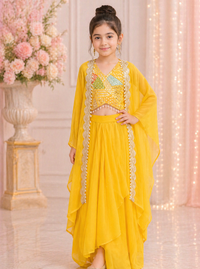
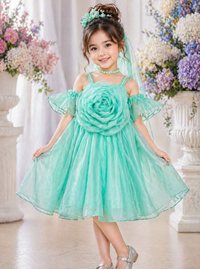
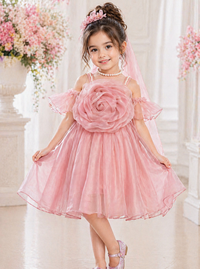


How to Choose the Perfect Lehenga for Your Little Girl — A Complete Buying Guide
To choose the right lehenga for your daughter, focus on three things: the occasion, the fabric, and the fit. For weddings and formal events, go for silk or art silk lehengas with embroidery. For festivals and garba, lighter fabrics like georgette or cotton-silk with mirror work are better. Always check the size chart, measure her chest and waist before ordering, and pick a length that lets her walk and dance without tripping.
A lehenga is the one outfit that makes every little girl feel like a princess — the twirl factor alone is worth it. But buying a kids' lehenga online can feel confusing. Heavy or lightweight? Silk or georgette? Floor-length or ankle-length? How much embroidery is too much for a 4-year-old? This guide answers every question Indian mums have when shopping for their daughter's lehenga, so you get it right the first time.
What Type of Lehenga Is Best for My Daughter's Age?
The right lehenga style depends largely on her age and how long she needs to wear it. A gorgeous floor-length silk lehenga means nothing if she's crying to take it off within an hour.
For babies and toddlers (0–2 years): A mini lehenga set in soft cotton or cotton-silk with an elastic waistband is ideal. Keep it knee-length or just below the knee — anything longer will bunch up when she crawls or toddles. Skip the dupatta or pin it securely to the choli so it stays in place.
For girls aged 3–6: A calf-length to ankle-length lehenga works best. She can manage a light dupatta at this age, especially if it's pinned to one shoulder. Look for lehengas with a semi-flared silhouette — enough volume for a good twirl, but not so much fabric that she trips over it. Drawstring or elastic waistbands are still easier than hook-and-eye closures at this age.
For girls aged 7–10: Floor-length lehengas look stunning and she's old enough to carry them comfortably. This is the age where you can go for heavier embroidery, a full flare with can-can, and a proper draped dupatta. She can handle hook closures, back-tie cholis, and more structured fits.
For pre-teens (11–14): Full bridal-style lehengas, contemporary crop-top lehengas, lehenga sarees, and jacket lehengas all work at this age. She can manage heavy fabrics, structured blouses, and statement dupattas. Let her choose the style — her comfort with the silhouette matters more than what looks best on a hanger.
Which Fabric Should I Choose for a Kids' Lehenga?
Fabric is the single biggest factor that determines whether your daughter will happily wear her lehenga all evening or beg to change within thirty minutes. Here's what works for each situation:
Cotton and cotton-silk: The most comfortable option for kids. Breathable, lightweight, and gentle on skin. Perfect for day events, casual festive wear, Navratri pooja, and any occasion in warm weather. The drape is softer and less structured than silk, which some parents prefer for younger girls.
Georgette and chiffon: Lightweight with a beautiful flow. Excellent for garba, sangeet, and events where she'll be dancing. Georgette holds mirror work and sequin embroidery well without adding weight. A georgette lehenga moves beautifully during twirls — very photogenic.
Art silk and Banarasi silk: Rich, lustrous, and perfect for weddings and formal celebrations. Art silk gives the silk look at a lower price point and is easier to maintain. Banarasi silk — with its signature zari weave — is the gold standard for traditional lehengas. Both are slightly heavier, so best for girls aged 5 and above.
Net and tulle: Creates volume and a fairy-tale look. Often used as an overlay on silk or satin. Great for birthday celebrations, receptions, and Indo-Western styled lehengas. Very lightweight despite the visual volume, which makes it surprisingly comfortable for kids.
Velvet and brocade: Luxurious and warm — ideal for winter weddings and cold-weather festivals. Heavier than other fabrics, so reserve for older girls (7+) and events where she won't be running around much. A velvet lehenga for a December wedding is absolutely stunning.
💡 Quick Tip: Always check the lining fabric, not just the outer material. A silk lehenga with a rough polyester lining will irritate your daughter's skin within minutes. Look for cotton-lined lehengas, especially for girls under 8. If the listing doesn't mention the lining fabric, ask the brand before ordering — this one detail makes a huge difference in comfort.
How Do I Pick the Right Size for a Kids' Lehenga Online?
Sizing is where most online lehenga purchases go wrong. Kids' sizes vary wildly between brands, and age-based sizing (e.g., "3–4 years") is unreliable because children of the same age can differ significantly in height and build.
Here's the foolproof approach:
Step 1 — Measure your daughter. You need three measurements: chest circumference (around the fullest part), waist circumference (where the lehenga will sit), and height (barefoot, standing straight). Use a soft measuring tape and measure over a thin layer of clothing.
Step 2 — Compare with the size chart. Every reliable brand provides a detailed size chart. Match her measurements to the chart — not her age. If her chest says size 5–6 but her height says 7–8, go with the larger size and adjust with the drawstring or get the waist altered.
Step 3 — Factor in timing. If the event is more than three weeks away, order one size up. Children grow fast, and a lehenga that fits perfectly today might be snug by the time the wedding arrives. A slightly loose lehenga can be adjusted with the drawstring; a tight one is unwearable.
Step 4 — Check the choli fit. The choli (blouse) fit matters as much as the lehenga. It should be snug but not tight — she needs to be able to raise her arms, breathe comfortably, and eat without the neckline digging in. If in doubt between two sizes, size up on the choli.
How Much Embroidery Is Right for a Kids' Lehenga?
This depends on the occasion and her age. The rule of thumb: the younger the child, the lighter the embroidery.
Light embroidery (thread work, small motifs, lace borders): Best for everyday festive wear, Rakhi, pooja, and casual family gatherings. Comfortable for all ages and easy to maintain. These lehengas are versatile — she can wear them to multiple occasions without looking overdressed.
Medium embroidery (gota patti, sequin borders, mirror work panels): Perfect for Diwali, Navratri, sangeet, and birthday celebrations. Adds sparkle without making the outfit heavy. Mirror work is especially popular for garba and Navratri — it catches light beautifully in the evening.
Heavy embroidery (all-over zari, zardozi, heavy sequin work, stone work): Reserve for weddings, receptions, and major celebrations. These lehengas are showstoppers but can be heavy and uncomfortable for extended wear. Best suited for girls aged 7 and above who can handle the weight. For younger girls, choose lehengas where the heavy work is concentrated on the border and choli, keeping the main skirt relatively light.
One important note: always check that embellishments are securely stitched, especially for younger girls. Loose sequins, dangling beads, and poorly attached mirrors can fall off and become choking hazards for toddlers.
What Colour Lehenga Should I Choose for My Daughter?
Colour depends on the occasion, but some shades are universally flattering on young girls:
Weddings: Maroon, deep pink, emerald green, royal blue, and gold are classic choices. Avoid deep bridal red out of respect for the bride — unless the bride's family specifically requests it. Pastel lehengas in blush, mint, and lavender are trending for wedding receptions.
Diwali and festivals: Red, orange, yellow, gold, and pink feel traditionally festive. Mustard and teal have become popular modern alternatives that still feel celebratory.
Navratri: Follow the nine-colour calendar if your community observes it. Otherwise, multi-colour or patchwork lehengas cover multiple days.
Birthdays and parties: Pastels, metallics, and non-traditional shades like champagne gold, dusty rose, powder blue, or lilac make for beautiful party lehengas that stand out from typical festive colours.
Versatile colours: If you're buying one lehenga that needs to work across multiple occasions, go for rani pink, teal, or wine — they work for weddings, festivals, and family events without feeling occasion-specific.
What Accessories Go With a Kids' Lehenga?
The right accessories elevate a lehenga from nice to memorable. But with kids, less is usually more — especially for younger girls.
Footwear: Juttis and mojaris are the classic pairing for lehengas. Look for ones with cushioned soles — she'll be on her feet for hours. For pre-teens, low block heels or embellished sandals work if she's comfortable in them. Avoid stilettos or high heels for anyone under 14.
Jewellery: For young girls (under 7), keep it minimal — a pair of small jhumkas and a few bangles are enough. For older girls, add a maang tikka, a delicate necklace, and stacked bangles. Pre-teens can carry oxidised silver sets, kundan jewellery, or statement earrings. Clip-on nose rings are popular for older girls who want the full ethnic look.
Hair accessories: A gajra (jasmine strand) in a braid or bun is timeless. Embellished hair pins, a small passa (side maang tikka), or fresh flowers all work beautifully. For younger girls, a simple embellished hair band matching the lehenga colour is easiest.
Bags: A potli bag in a matching or contrast colour is the traditional choice. They're small, functional (she can carry her phone, lip balm, or a small toy), and look adorable with ethnic wear.
How Do I Take Care of a Kids' Lehenga After the Event?
A good lehenga is an investment — and with proper care, it can be reused for multiple occasions or even passed down to a younger sibling or cousin.
Immediately after wearing: Air it out on a padded hanger for a few hours before storing. This prevents odour and lets any moisture from sweat evaporate.
Cleaning: Most embroidered lehengas should be dry-cleaned, not machine washed. Hand washing is an option for cotton and georgette lehengas with light embroidery — use cold water and a gentle detergent, and never wring. Check the care label first.
Storage: Wrap in a muslin or cotton cloth — not plastic. Plastic traps moisture and can cause discolouration on silk and zari work. Store flat if possible, or on a padded hanger. Keep silica gel packets nearby to absorb moisture, especially during monsoon.
Reusing: A well-chosen lehenga can easily be worn 3–4 times across different events. Change the dupatta styling, swap the accessories, or pair the lehenga skirt with a different blouse to create a fresh look without buying a new outfit.
Frequently Asked Questions
What is the best lehenga for a 1-year-old girl?
A soft cotton or cotton-silk mini lehenga with an elastic waistband and light embroidery. Keep it knee-length, skip the dupatta, and ensure there are no loose embellishments. Comfort is the top priority at this age.
Can I buy a lehenga one size bigger and alter it?
Yes — this is actually a smart strategy. Most lehengas have a drawstring or elastic waist that accommodates size differences. The choli can be altered at the seams. Buying slightly bigger also means she might get two seasons of wear out of it.
How is a kids' lehenga different from an adult lehenga?
Kids' lehengas use lighter fabrics, have simpler closures (elastic or drawstring vs hooks), feature age-appropriate embroidery weight, and are proportioned for smaller frames. The construction is similar but prioritises comfort and safety over heavy ornamentation.
Should I buy a lehenga set or buy the pieces separately?
A matching set is easier and ensures the choli, lehenga, and dupatta coordinate perfectly in colour, fabric, and embroidery. Buying separately gives more customisation but risks mismatched shades. For most parents, a complete lehenga set from a trusted brand like Little Rajkumari is the simplest and safest option.
What is the difference between a lehenga and a ghagra?
They're essentially the same garment — a flared skirt worn with a choli and dupatta. "Ghagra" is more commonly used in Rajasthan and Gujarat, while "lehenga" is the pan-India term. A chaniya choli, used specifically for garba, is a sub-type with extra flare designed for dancing.
Find Her Perfect Lehenga
A lehenga is more than just an outfit — it's the twirl, the sparkle, the moment she looks down at her skirt and feels like royalty. Whether you're shopping for a baby girl's first festival, a showstopper wedding lehenga for your 8-year-old, or a trendy contemporary set for your pre-teen, the right lehenga is one that fits well, feels comfortable, and makes her eyes light up when she sees herself in the mirror. Browse Little Rajkumari's lehenga collection to find kids lehenga online India — handpicked for real celebrations and designed to make every little girl feel like a rajkumari.


